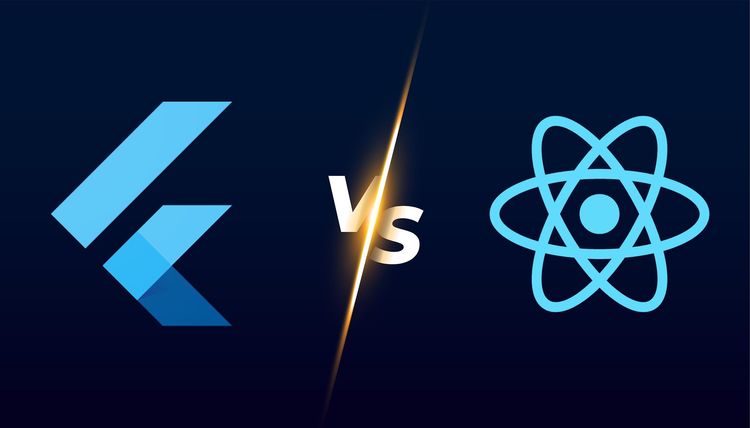
If your company is evaluating developing a mobile application, sooner or later it will arrive at the same strategic question: Flutter vs React Native in 2026, which is the right choice to maximize ROI? Both are mature cross-platform frameworks that allow building apps for iOS and Android with a single codebase. Both have the backing of giants — Google and Meta respectively — and communities exceeding millions of developers.
But in the current market, they are not interchangeable. Choosing poorly can cost you time, money, and technical debt that persists for years. At MiTSoftware, we develop mobile applications with both technologies and have managed critical migrations from one to the other. What follows is an analysis based on real projects, not laboratory benchmarks.
Technical Comparison: What has changed in 2026?
| Feature | Flutter (Google) | React Native (Meta) |
|---|---|---|
| Rendering Architecture | Own engine (Impeller/Skia) | Native Components (JSI/Fabric) |
| Programming Language | Dart (Strongly typed) | JavaScript / TypeScript |
| Learning Curve | Medium (New language) | Low (If coming from Web/React) |
| Visual Consistency | 100% identical (Pixel-Perfect) | Adaptive (Native look per OS) |
| Graphic Performance | Superior in 60/120fps animations | Excellent for data apps |
What is Flutter and how it works in the current ecosystem
Flutter is Google's mobile development framework that has matured massively since 2018. Its fundamental technical difference, which remains its biggest advantage in 2026, is that it does not use the operating system's native components. Flutter draws every button, text, and graphic with its own engine.
This means a Flutter app looks exactly the same on a next-generation iPhone as it does on a mid-range Android device. It is the winning choice when visual consistency is critical for brand identity or user experience. Performance is extremely predictable because the framework directly controls how each element is drawn on the screen, avoiding communication "lag" with the system.
Looking for seamless visual results? Explore our Flutter development service in Barcelona.
What is React Native and why it remains the leader in corporate adoption
React Native is Meta's framework, the most veteran and preferred by teams that already master frontend web development. Its approach is different: it uses a "bridge" (now evolved into JSI) to communicate with native iOS and Android components.
React Native apps do not try to "imitate" the platform; they become it. The buttons are the native Apple or Google buttons. With the Fabric architecture, React Native has almost completely closed the performance gap it historically had with Flutter, making it today a highly fluid option for 95% of commercial applications.
Flutter vs React Native 2026: Pillar Analysis
1. Performance and Graphic Load
In terms of raw performance, Flutter maintains a slight advantage in applications with complex animations or interfaces with a high load of micro-interactions. However, for standard enterprise applications — forms, product listings, navigation — both frameworks perform indistinguishably for the end user.
2. Artificial Intelligence (AI) Integration
In 2026, integration with AI models and coding assistants is no longer optional. Both frameworks support modern SDKs to connect your app with LLMs (OpenAI, Gemini, Claude). However, in a developer's day-to-day, Dart (Flutter), being a strongly typed language, tends to generate much more precise code suggestions in assistants like Copilot or Cursor, reducing code "hallucinations". On the other hand, React Native benefits from the immense volume of JavaScript code on which the models have been trained, facilitating extremely fast integrations.
3. Ecosystem and Third-Party Libraries
React Native, being based on the JavaScript ecosystem (the most widely used language in the world), has an advantage in libraries. If your app needs to integrate with very specific SDKs or services that only offer official JS support, React Native will save you months of manual integration development.
4. Talent Availability and Maintenance
If your company already has web developers, React Native drastically reduces onboarding time. Dart (Flutter's language) is robust and well-designed, but finding senior specialists can be a bigger challenge in certain markets, although its maintenance tends to be more predictable in the long run due to less reliance on unstable third-party libraries.
5. Consistency vs. Naturalness
In the Flutter vs React Native 2026 debate, Flutter wins in consistency: what you see in the simulator is what the user will see. React Native wins in "naturalness": the user feels the app is an integral part of their phone, respecting the visual conventions of each ecosystem.
When to choose Flutter in 2026
- The visual experience and pixel-perfect design are your top priority.
- You are starting a project from scratch and don't have a prior JavaScript codebase.
- You have plans to expand to Web and Desktop (Windows/macOS) using the same development team.
When to choose React Native in 2026
- Your internal team already masters React and TypeScript.
- You need to integrate the app with a complex ecosystem of existing JavaScript libraries.
- The initial launch speed is more important than having total control over every pixel.
Market reality and why to choose MiTSoftware
In the context of 2026, the data shows a balanced landscape. Google reports millions of apps in production with Flutter, while React Native maintains its dominance in the corporate sector with consolidated web ecosystems. The decision is not a bet on a "winner", but a technical choice based on your specific context.
At MiTSoftware, we don't limit ourselves to a single technology. We develop with Flutter and React Native based on your business objectives. With over 35 years building digital solutions, we know that the best technology is the one that solves your problem with the lowest possible maintenance cost.
Ready to take the next step?
Don't let the technical choice be a bottleneck for your innovation.