One of the most frequent problems when a company implements an AI chatbot or assistant is that the system answers general questions well but knows nothing specific about the business: it doesn't know the product catalog, doesn't have access to internal policies, doesn't know how the onboarding process works or what the master contract with clients says.
The solution to that problem is called RAG — Retrieval Augmented Generation — and it's the technology behind the most effective enterprise AI systems in 2026.
What RAG Is in Business Language
RAG is a technique that combines two capabilities: a language model's ability to understand and generate text, and a search system's ability to find relevant information in your company's own documents.
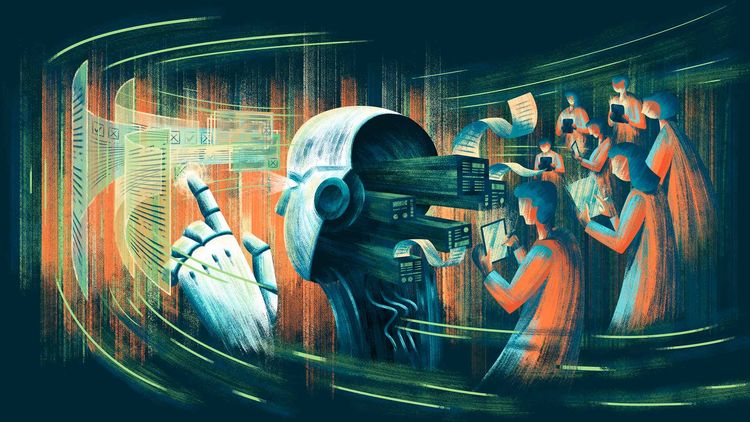
How it works: when a user asks a question, the system first searches the company's document base for the most relevant fragments for that question — manuals, policies, catalogs, contracts, historical emails — and then passes them to the AI model along with the question to generate a response based on that specific information.
The result is an assistant that responds with your company's real knowledge, not generic internet knowledge.
Why RAG Is Different from Just Giving ChatGPT Documents
ChatGPT has a context limit — how much text it can process in a single conversation. If your company has thousands of documents, you can't pass them all in every query. RAG solves this by searching only the most relevant fragments for each question.
Also, uploading confidential documents to ChatGPT means that data leaves your infrastructure. A RAG system of your own can be deployed on your infrastructure, with your data, without it ever going to external servers.

Want to implement RAG in your company so AI answers with your data? We explain the process. Talk to our team →
Enterprise Use Cases Where RAG Adds the Most Value
Customer support with product knowledge
A RAG assistant trained on the product catalog, FAQs, technical manuals, and resolved incident history can answer 70-80% of support queries accurately and with the ability to cite exactly which document the answer comes from.
Internal corporate knowledge assistant
Every company has institutional knowledge scattered across hundreds of documents: policies, procedures, onboarding guides, relevant meeting minutes. An internal RAG assistant allows any employee to consult that knowledge in natural language, in seconds.
Assistant for sales and pre-sales teams
A sales rep who can instantly consult technical specifications for all products, relevant success cases for the prospect's sector, and sales arguments — all in a single conversational interface — is significantly better prepared for each conversation.
Contract and legal document analysis
With RAG, an executive can ask in natural language about the content of the company's contracts — "what contracts expire in the next 90 days?", "what penalty clauses do we have with supplier X?" — and get accurate answers with reference to the source document in seconds.
What You Need to Implement RAG in Your Business
The first element is the document base: identify what knowledge you want the system to have and ensure it's in processable formats.
The second element is the technical infrastructure: a vector database (Pinecone, Weaviate, Chroma, or pgvector), a document processing pipeline, and integration with the language model.
The third element is the retrieval system design. A poorly designed system generates inaccurate responses even if the correct documents are in the database.
To evaluate whether your company has the right conditions, you can read how to know if your business is ready to integrate artificial intelligence.
How Much Does It Cost to Implement a RAG System
A basic RAG system can be implemented for between €10,000 and €25,000 in initial development. A more complex system with multiple data sources, role-based access control, and integration with enterprise systems can exceed €40,000–€60,000.
For broader cost reference, you can consult custom software cost in 2026.
Why MiTSoftware
At MiTSoftware we implement RAG systems for companies that want their AI to answer with their own knowledge. Our artificial intelligence team has experience in document processing pipeline design, selection of appropriate vector databases, and retrieval system optimization.
We don't sell standard solutions. We analyze your knowledge base, your specific use case, and your current infrastructure to design the RAG system that best fits your company.
Ready for AI to answer with your company's knowledge? Tell us your case. Request a free proposal →