Testing is one of the biggest hidden costs in software development. In a medium-sized project, between 20% and 30% of the total budget goes to testing — and most of that time is repetitive manual work: hand-written test cases, manual executions, regression reviews repeated every sprint. AI is significantly changing that equation in 2026, and companies adopting it are seeing real reductions in QA time and cost.
Why Manual Testing Is Still a Problem in 2026
Despite advances in automation, most mid-sized companies still rely on manual testing for a significant part of their QA. The reasons are well known: setting up an automation framework has a high upfront cost, maintaining automated tests requires time when code changes, and QA profiles with automation experience are scarce and expensive.
The result is a cycle where testing slows down launches, increases sprint costs and creates friction between development and quality teams. Bugs that escape to production add additional cost — in fix time, user impact and reputation.
What AI Can Do in the Testing Process
Automatic Test Case Generation
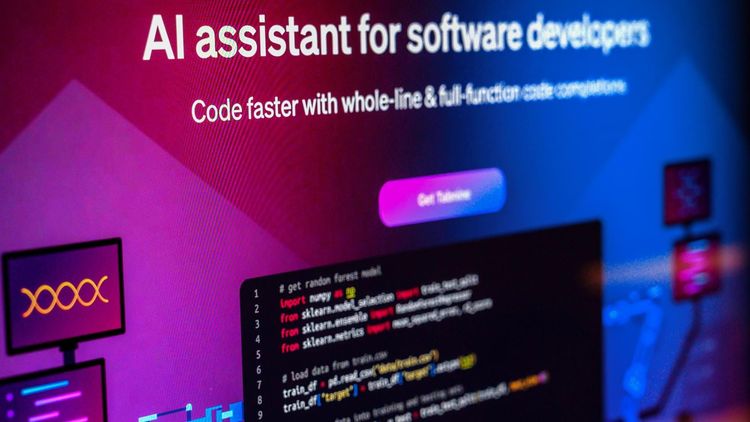
Current AI models can analyze source code or functional specifications of a feature and automatically generate relevant test cases — including edge cases that manual QA might not consider. Tools like GitHub Copilot, Tabnine and specialized solutions like Diffblue can generate unit tests directly from code, drastically reducing test writing time.
At MiTSoftware we integrate these capabilities within our custom web development and DevOps services, where automated testing is part of the pipeline from the first sprint.
Intelligent Maintenance of Automated Tests
One of the biggest costs of automated testing is not writing the tests but maintaining them. Every time the interface or business logic changes, existing tests break and someone has to update them. AI can detect which tests have broken due to code changes and automatically propose the necessary updates, reducing maintenance time by 40% to 60%.
Visual Testing with AI
Tools like Applitools or Percy use AI to automatically compare how an interface looks before and after a change, detecting visual regressions that functional tests don't catch. Especially useful in projects with complex UI/UX design where visual changes are frequent.
Intelligent Test Prioritization
Not all tests carry the same risk. AI can analyze the code change history and bug history to identify which areas of the system are most likely to break with each change, and prioritize running the most relevant tests. This reduces test suite execution time without losing coverage in critical areas.

Want to implement AI testing in your software projects? Talk to our team →
AI Testing Tools We Use at MiTSoftware
In our projects we combine several tools depending on the type of testing each project requires. For unit and integration testing we use GitHub Copilot and Diffblue to accelerate test generation. For end-to-end testing with automated maintenance, Playwright with AI assistance is our main option. For visual testing, Applitools offers the best balance between accuracy and cost.
The tool choice is not universal — it depends on the project's technology stack, the volume of existing tests, and the current maturity of the QA process. A team working with Python has a different path than one working with React or Flutter.
How Much Can You Really Save
The results vary depending on the starting point, but in projects where we have implemented AI testing the patterns are consistent: test case generation is reduced by 50% to 70% in time. Maintenance of existing tests drops by 40% to 60%. And the full suite execution time can be reduced by 30% to 50% through intelligent prioritization.
Why MiTSoftware
At MiTSoftware we implement AI testing strategies as part of our software development and DevOps services. If you also need an audit of your current code before implementing automated testing, our software review and consulting service is the right starting point.
Ready to reduce testing costs in your projects? Request a free diagnosis →